.png)
Finding Meaning
Dear brothers and sisters, I am writing for all who are looking for some kind of meaning in their
lives. Humans are desiring beings, searching beings, always looking for some kind of fulfillment.
We’re looking for a permanent hold on life, security, happiness or joy, love and communion. For
truth, integrity, goodness, beauty, the infinite, connection with others and the world. We find
much in the world that satisfies us, gives genuine joy, particularly friendship or meaningful work
or pleasurable activities. But as the lady in a Wallace Stevens poem says, “in contentment I still
feel / The need of some imperishable bliss.” We always feel the need for “more,” we’re made for
“more.” There’s an inextinguishable restlessness in the human heart.
Since the world offers so much that does give a measure of pleasure, we are tempted to seek
our total fulfillment in one or other of these gratifications. There are drugs, alcohol, food, the
perfect body, possessions, wealth, gambling, social media, indiscriminate sexual activity, power,
fame, cults, gangs, extremes of the political spectrum. Even work can be an addiction, a way of
finding worth and meaning. Many of these are goods and are helpful if not made ends in
themselves. But when they become dominant in our lives we become their slaves.
Overindulgence in any of them leads to self-destruction and great harm to those around us.
Millions of lives are damaged or destroyed by addictions to each one of these gratifications.
Fortunately, many people led astray by these deceptive sources of fulfillment discover that they
are dead-ends and are led to look deeper for what will fulfill their interior longing. They may turn
to self-help books or podcasts or various therapies and find there a deeper meaning for their
lives. Yet even here the underlying longing for permanent bliss makes itself felt.
The Good News is that humanity has received a response to this yearning, a response from one
who placed it there in the first place. The yearning that we feel comes from the One who made
the universe and knows its purpose. He is infinite, beyond time, and knows what will satisfy our
heart. He wants to give us the infinite we long for, to satisfy our deepest needs and longings. He
wants us to have undying life, perfect joy, union with himself. This is the infinite one who has
come to the world in the man Jesus Christ, God from all eternity who also reveals that he has a
Father in heaven, i.e., in the world that transcends this created world, a Father who is equally
God with him, one God. In becoming man he attached this world, this mortal world, to himself,
and by rising from the dead gave this mortal life infinite fullness.
He offers this fullness to all who are willing to receive his message, who recognize in it the
response to their deepest yearnings. The Creator is on the side of human life, wants its
complete flourishing. To show this he became one of us so that we could see his love in action.
Jesus “went about doing good,” showing divine power by healing the sick, casting out evil
spirits, raising the dead, feeding the multitude on whom he “had compassion,” promising eternal
life to those who would accept him. A reading of the Gospels can show the power and
attractiveness of this love, its authenticity. Meeting others who have found joy and peace in
Jesus can be another way of encountering him. The final proof of his love is that he maintained
love even for those who put him to death for upsetting their self-righteousness.
Jesus is the revelation that the one who made us is in love with us and desires to unite us to
himself forever in bliss. He gives us the life we were looking for, and gives it “to the full.” He is
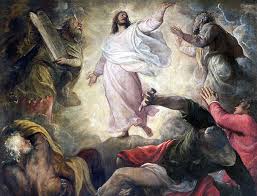
the consummate beauty—divinity shining through his humanity (see the Transfiguration). He is
the perfect human response to the Father’s love. When he rose from the dead he sent out his
Spirit, a third divine Person, to “be with us forever.” This Spirit incorporates us into him, into the
risen Lord, making us God’s “adopted children.” We experience this communion already in this
life while waiting for its full revelation after death. The only thing that will satisfy human longing is
the knowledge that one, in all his or her uniqueness, is loved by the power behind the world,
willed into being out of love, and destined for union with the Creator.
How is it that we become partakers in this new and genuine life? Jesus looked for only one thing
while on earth, faith in himself, in his godhead, in his lordship. He looked for Thomas’s
confession, “My Lord and my God.” Faith is nothing less than acceptance of the love of God
offered to us through Jesus Christ, in particular through his death and resurrection. Faith says
“Yes” to Jesus, I submit my life to you, I build my life on your love as on a rock. I allow you to live
in me and make me a child of God, one who by the power of your Spirit slowly transforms me
into one who can love like you.
To hear this message of Jesus is to be drawn into his Body, made a member of him as beloved
Son of the Father. This Body is a visible society on earth, consisting of all who believe in Jesus
and accept his risen life transmitted through this body. The full following of Jesus involves visible
communion with all our brothers and sisters who have accepted his lordship and live with his
life. This life is visibly nourished and strengthened by our participation in the sacred meal he left
us as a living memorial or making present of his sacrifice on the Cross which saved us. The
Eucharist both unites us personally with Christ and makes the unity of the people of God. It
communicates the power to be more and more conformed to Jesus in one’s thoughts, words
and deeds. It awakens our cooperation with him and stimulates us to ask continually for his
transforming power in our lives.
The mission of the Church is to proclaim to the people of our day the immense love their Creator
has for each of them, the love shown by the death and resurrection of Christ. If many folks have
left the Catholic Church it is because their membership was based not on a personal encounter
with the saving Christ but on inherited institutional membership that had lost the sense of
personal encounter with God. The Church was tending to stress commandments over
communion, whereas it is only the communion with the risen Lord that empowers us to keep
those difficult commandments of Jesus. Our task now is to reach out to people, to get to know
them, to listen to their needs and hopes and desires. Then we can share with them how our own
similar desires and longings have been abundantly met by the love of Jesus. He alone answers
the deepest desires of every human heart.
One difficulty folks might have today in encountering Jesus is that they have experienced
trauma in their lives. Such trauma, especially in childhood, can cause one to develop certain
protective patterns of behavior that prevent one from being able to accept love. It may be that
help can be provided by psychology or psychiatry. Much has been learned in the twentieth
century about the influence of unconscious forces in our lives. Therapy can help a person get in
touch with these forces, befriend them, and arrive at a certain “comfort in one’s own skin.” These
natural therapies dovetail well with the supernatural revelation of the intense personal love of
the Creator for each of his children. I can learn to love myself as a beloved child of God who has
the power to build others up in that same love. I can spread the word that each of us is of infinite
value in the sight of God, no matter how troubled or handicapped our life has been. In the words
of Viktor Frankl, “An incurably psychotic individual may lose his usefulness but yet retain the
dignity of a human being. This is my psychiatric credo.”
When we look more closely at the message of Jesus, we see that he died to save us from our
sins. What are these sins? Humanity from the beginning has been afflicted with a tendency to
reject the love of God and assert its own independence, its own control over existence. Each
person is a substantially good creature of God that has been damaged, wounded by a tendency
to make him/herself into the center of things, a god. This is called idolatry. When we are
confronted with the boundless love of the Creator who suffered death to remove this obstacle to
receiving his love, we confess our sorrow for our participation in this self-worship. This sorrow is
called repentance and accompanies that faith by which we accept the love of God in Jesus. The
Good News Jesus brings into this searching, seeking world is that any evil lurking in our heart,
any preference of self over God or others, has been vanquished for those who will accept his
victory.
Those who accept Jesus are thus a “new creation,” capable of overcoming evil and entering into
communion with the three persons of God, Father, Son and Holy Spirit. The Christian shares in
the life of the Trinity, in the eternal ineffable exchange of love among the three Divine Persons. It
is this sharing that responds to those deep needs of the human heart we noted at the beginning.
He gives us the joy of eternal communion with the divine Persons and with one another, the life
that alone can satisfy our restless heart.
The desire of the Church, of all members of Christ, is that all men and women may come to
know and welcome the unspeakable love God has for each of them. It is those who accept this
love in Jesus who form the “kingdom of God,” that world in which love and peace reign. It is this
joyful presence of the risen Jesus in our lives that gives men and women power to lay down
their lives for others cheerfully, to die with Jesus so that love may triumph in the world. The task
of Christian evangelists is nothing more than what Mother Angelica said so simply: “The
essence of evangelization is to tell everybody, ‘Jesus loves you.’”